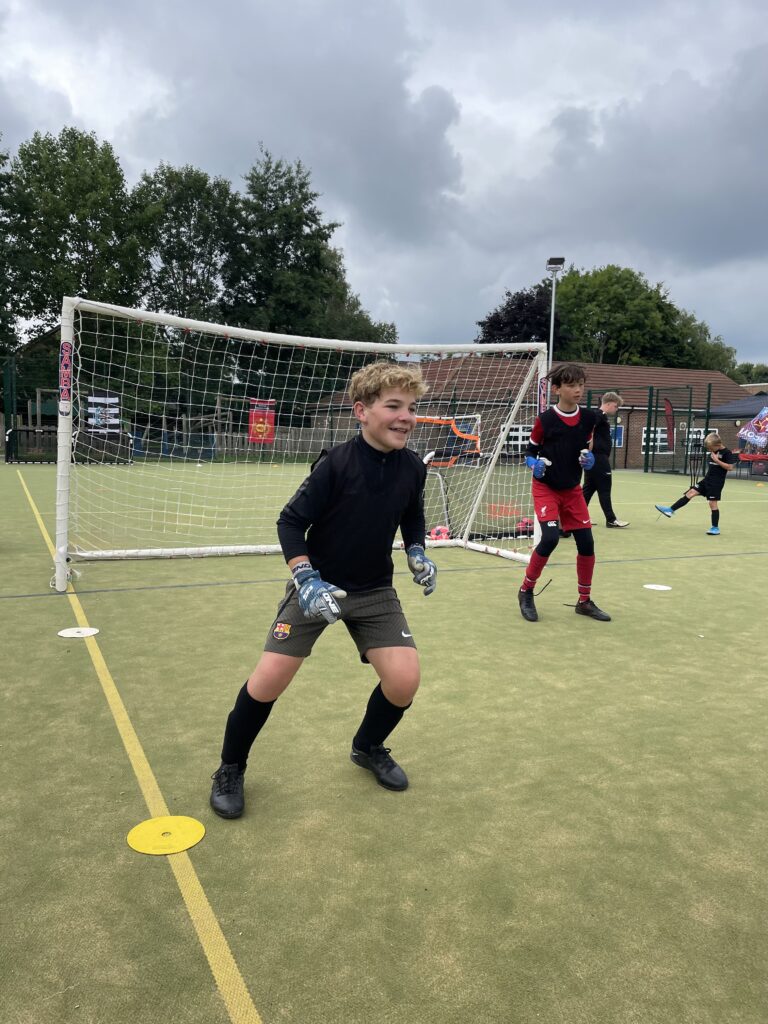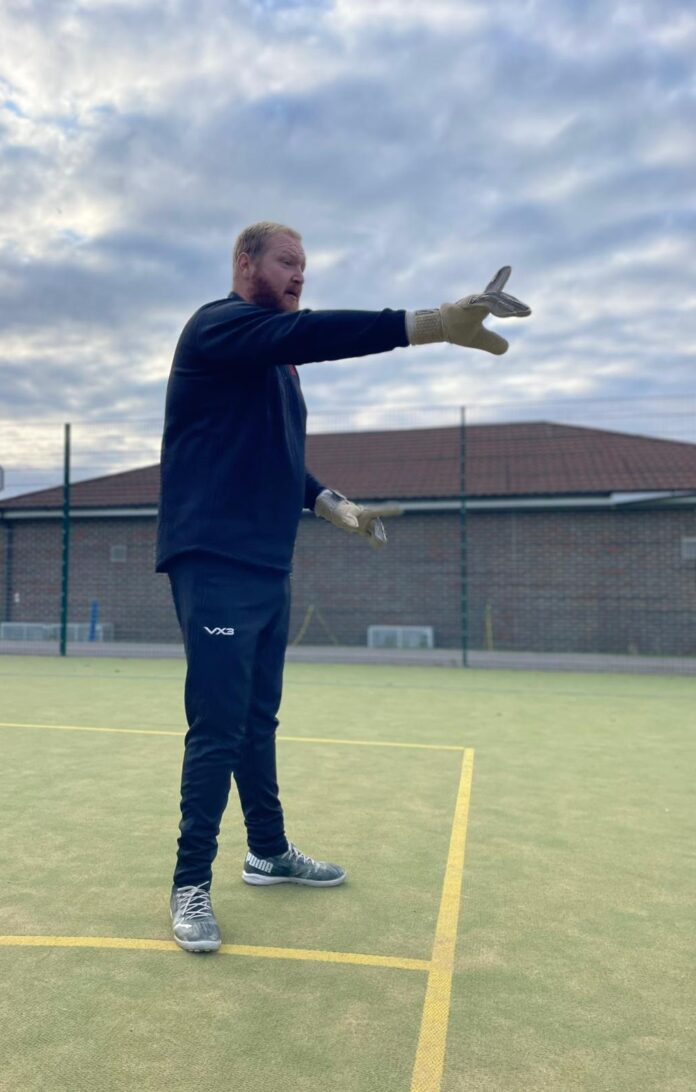
(Sweeper Keeper)
The rise of the “Sweeper Keeper” 🚀, a goalkeeper who goes beyond their traditional role to act as an extra defender 🛡️, often in advanced positions on the field 🏟️.
A Sweeper Keeper is a goalkeeper who plays a much more active role 🎯 than the traditional Shot-Stopper 🧱.
Rather than staying close to the goal 🥅, they push up the pitch ⬆️, functioning as an additional defender 🧍♂️ and covering the space behind the defence 🚧.
This allows the team to play a higher defensive line 📈, enabling the goalkeeper to challenge through balls 🎯, intercept passes ✂️, and contribute to the attack from the back ⚡.
The role of the Sweeper Keeper has developed alongside the rise of possession-based football 🔄⚽.
Historically, goalkeepers were expected mainly to stop shots ✋ and stay near the penalty area 🧍♂️.
However, as tactics evolved 🧠, the need for goalkeepers who could distribute the ball 🎯 and feel comfortable outside their box 📦 became increasingly important.
🔑 5 Key Characteristics of a Sweeper Keeper
• 🦶 Comfortable with the ball at their feet
• 🎯 Accurate passing and distribution over different distances
• ⚖️ Strong decision-making – when to come out and clear vs. drop to defend the goal
• 👁️ High awareness and quick thinking
• 💪 Bravery and confidence under pressure
⚖️ Pros, Cons, and Challenges of the Sweeper Keeper Role
The Sweeper Keeper role offers many tactical advantages 💡.
By positioning themselves higher up the pitch ⬆️, the goalkeeper provides an extra layer of defence 🧱, allowing the team to press higher 🔺 and play more aggressively ⚔️.
This high-line strategy 📏 is key for teams that prioritise possession and fluid build-up play 🔁.
It also enhances attacking play ⚡, as the goalkeeper becomes an extra passing option 🔄.
They can intercept loose balls or overhit through balls ✂️, enabling teammates to make braver attacking runs 🏃♂️💨, knowing the goalkeeper is there to cover defensive gaps 🕳️.
However, this advanced positioning comes with risks ⚠️.
A well-timed counterattack 🚀 or long pass 🎯 can exploit the space behind them 🕳️, leaving the goal vulnerable 🥅.
The margin for error is small ⏳ — a misjudged decision ❌ or slow reaction 🐢 can open the door for an easy goal for the opponent 🎯.
This high-risk, high-reward strategy 🎲 demands technical excellence ⚙️, quick thinking 🧠, and mental toughness 💪.
🧭 The Role of the Sweeper Keeper in Various Football Systems
The Sweeper Keeper is most effective in high-pressing 🔺 and possession-based systems ⚽, where they can act as an extra defender 🧱 and support the build-up from the back 🧩.
In these setups, the goalkeeper steps forward ⬆️ to intercept through balls 🎯 and launch counter-attacks 💥.
However, teams that rely on counter-attacking football ⚡ may not benefit as much, since the goalkeeper’s advanced position ⏩ can leave them exposed to quick breaks 🏃♂️💨.
Ultimately, the success of a Sweeper Keeper ✅ depends on both the team’s tactical system 🗺️ and the goalkeeper’s ability to fit seamlessly into it 🤝.
🧠 Conclusion
The Sweeper Keeper role has transformed modern goalkeeping 🔄, requiring goalkeepers to defend higher ⬆️ and contribute to build-up play 🎯.
While elite players like Manuel Neuer 🇩🇪 and Ederson 🇧🇷 have mastered the art 🏆, the role carries risks ⚠️ — advanced positioning can leave the goal exposed 🥅.
Success depends on:
- ⚖️ Quick, intelligent decision-making
- 🧩 Tactical understanding
- 💪 Confidence under pressure
For teams focused on possession and high pressing 🔺⚽, the Sweeper Keeper is a major asset 💎, but it always requires a careful balance between risk and reward 🎯.